
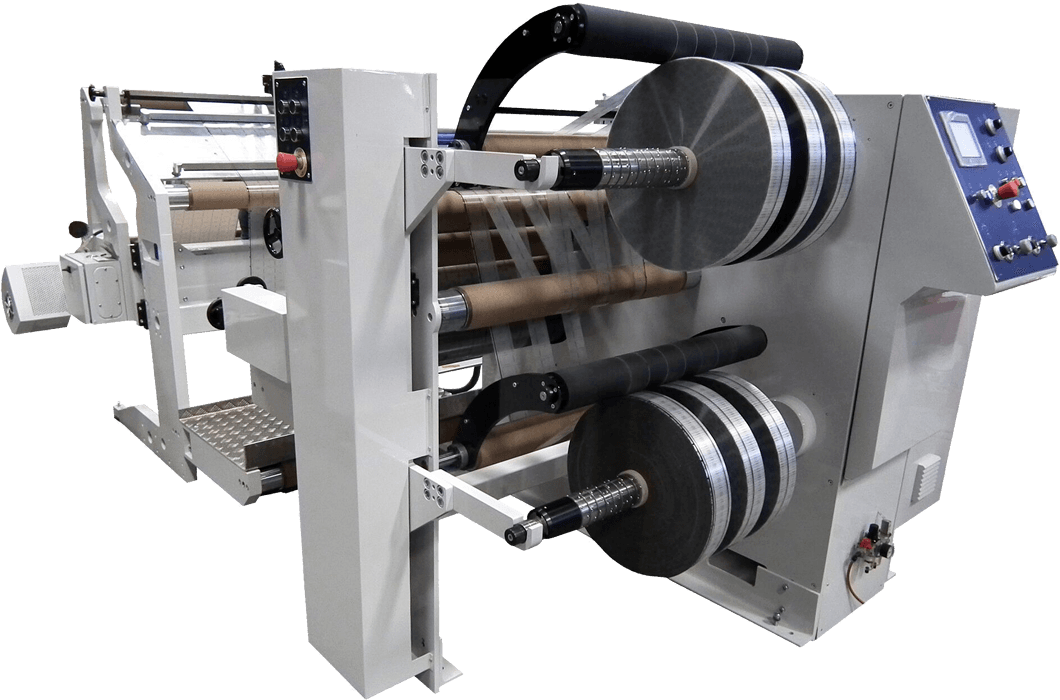
The converting industry employs a multitude of machinery. This machinery works to process rolls of material such as paper, film, foil, and nonwovens. Among these machines, slitter rewinders are vital for making large rolls smaller. Although all slitter rewinders share this basic function, they are not created equal. The two main categories are wide-web and narrow-web slitter rewinders. Understanding the distinctions between these two categories can help you make informed decisions. With this understanding, you can maximise your manufacturing processes.
What’s the Difference Between Narrow-Web and Wide-Web Slitter Rewinders?
Both narrow-web and wide-web slitter rewinders perform similar functions. That said, their applications are quite different. Below is a breakdown of what differentiates these two types of rewinders:
Web Width: The Defining Characteristic
The term ‘web’ refers to the continuous roll of processed material. There is one straightforward difference between wide-web and narrow-web slitter rewinders. This is the width of the material they can handle. Wide-web slitter rewinders tend to process materials that are 50 inches or wider in width. They are the go-to option for industries that demand large-scale production. For instance, the packaging sector.
Narrow-web slitter rewinders are for materials that are narrower than 50 inches. These machines are popular in specialised sectors like labelling. In these sectors, precision and customisation are paramount.
Speed and Volume: Efficiency at Different Scales
Wide-web slitter rewinders are for mass production. They often feature advanced automation and higher cutting speeds to maximise throughput. These deal with larger roll diameters and widths. As a result, they maintain high levels of accuracy even at such speeds.
In contrast, narrow-web slitter rewinders are not usually built for speed. Instead, they’re built for precision. They are common in industries where cut quality and machine versatility are critical. These features are more important than the sheer volume of material processed.
Flexibility and Configurability: Adaptability Matters
Narrow-web slitters are very versatile. You can often configure them for different cutting requirements with ease. This makes them ideal for smaller, specialised runs. Such flexibility allows manufacturers to switch between different materials and cutting specifications. They can do so with more ease than with wide-web machines.
Wide-web machines are generally less flexible. Yet, they offer more stability and consistency for large-scale runs. They are for a specific type of job and are less adaptable to rapid changes.
Space Requirements: The Footprint Factor
The size of the machine is another critical factor to consider. Wide-web machines are larger, requiring a more considerable operational footprint. This can be a disadvantage for facilities with limited floor space.
Narrow-web machines have the benefit of a smaller footprint. As a result, they’re a more viable option for businesses with space constraints. This makes them popular choices for small to medium-sized enterprises.
Cost Considerations: Initial and Long-term Impacts
Wide-web slitter rewinders generally come with a higher price tag. This is due to their larger size. At the same time, they need advanced technology to maintain speed and accuracy at scale. That said, production costs often drop as volume increases. Over time, these savings could cover the initial expense.
Narrow-web slitters are generally more affordable. That said, they might demand more frequent changeovers or adjustments. This is especially true if they’re used in a variety of applications. The total cost of ownership could vary depending on the specifics of your operation.
What Are Wide-Web Slitter Rewinders Used For?
It’s important to understand the applications and industries where wide-web slitter rewinders excel. This understanding can provide insights into whether they are right for your operations. These machines are generally designed for large-scale, high-volume production. In these instances, efficiency and throughput are paramount. Below are some of the key areas where wide-web slitter rewinders are most often used:
Packaging Industry
In packaging, the need for high-volume production is perfect for wide-web slitter rewinders. These machines can produce plastic films, laminates, and foils. They can handle the large roll widths and diameters typical in this industry. This makes them a staple in the production lines of packaging materials.
Textile Manufacturing
Textiles are often produced in large widths and volumes, especially for industrial applications. Wide-web slitter rewinders can process these large rolls of fabric. They provide clean and precise cuts that are essential in textile manufacturing.
Nonwovens and Medical Products
Consistency and scale are essential for manufacturing nonwoven materials. This is especially true for medical or hygiene products. Wide-web slitter rewinders can handle these materials. This ensures that the end products meet the stringent quality standards. The standards required in medical applications are among the strictest.
Agricultural Films
You can use these specialised materials in a variety of agricultural applications. These range from greenhouse covers to mulch films. They often come in large rolls that are best handled by wide-web slitter rewinders.
What Are Narrow-Web Slitter Rewinders Used For?
Wide-web slitter rewinders are for industries requiring high-volume production. Meanwhile, narrow-web slitter rewinders fill a different niche. These machines boast precision and adaptability. This makes them suitable for a variety of specialised applications and industries. For instance, those who demand more intricate, tailored solutions. Here are some key uses for narrow-web slitter rewinders:
Labelling Industry
One of the primary applications of narrow-web slitter rewinders is labelling. These machines are ideal for cutting label materials into precise widths. The industry demands this precision for product labels. Such materials include paper, plastic, and even metallic films.
Medical and Pharmaceutical Applications
Precision and quality are paramount in the medical and pharmaceutical sectors. Narrow-web slitter rewinders are often used to cut specialised films, foils, and laminates. We use these in medical devices, pharmaceutical packaging, and sterilisation products.
Automotive Components
For automotive applications, narrow-web slitter rewinders cut materials to the exact specifications required. Such applications include gaskets, seals, and certain interior elements. The flexibility of these machines allows for easy reconfiguration. As a result, they can handle different material types and sizes.
Narrow-web slitter rewinders prioritise adaptability and precision. They handle a wide range of materials with ease. These machines offer a versatile solution for specialised industries. They can adapt to varying production requirements. This makes them an invaluable asset for businesses with diverse or changing needs.
Find the Right Slitter for Your Needs
Choosing between a wide-web and a narrow-web slitter rewinder involves various considerations. These range from the scale of your operations to the kinds of materials you’ll be processing.
Wide-web machines are suitable for large-scale, high-speed applications. In these instances, efficiency and volume are crucial.
Narrow-web machines offer greater flexibility. They are more suited for specialised, lower-volume production.
By understanding the differences, you can make an informed decision. You can rest assured that this decision aligns with your business needs.
Do you need help selecting the right slitter rewinder for your needs? If so, get in touch with our team at ASHE Converting Equipment today.
 English (UK)
  English
  Español
  Deutsch